Stockholm's startup scene: Part 2: Joel from Sana on Workday: a match made in heaven?


When I first heard about the $1.1bn deal that saw Swedish AI startup, Sana, acquired by Workday in late 2025 I felt a range of emotions.
Intrigue, of course: nothing gets the juices flowing like some red hot M&A.
But also relief, because as a one-time employee of a couple of companies that have used Workday, I fundamentally despise its UX (doesn't everyone?) and I love the idea that Sana could actually make it usable to a normal human being.
This deal will be one to watch over the next year: How will the integration work?
Will Sana be able to stay Swedish as Joel hopes, even after being acquired by an American firm?
Have you ever worked at a company that was acquired by an American firm?
Because I have, and boy could I tell you some stories.
Anyway, enough of the prelim: Below is my interview with Joel. Please share if you like it and keep quiet if you don't.
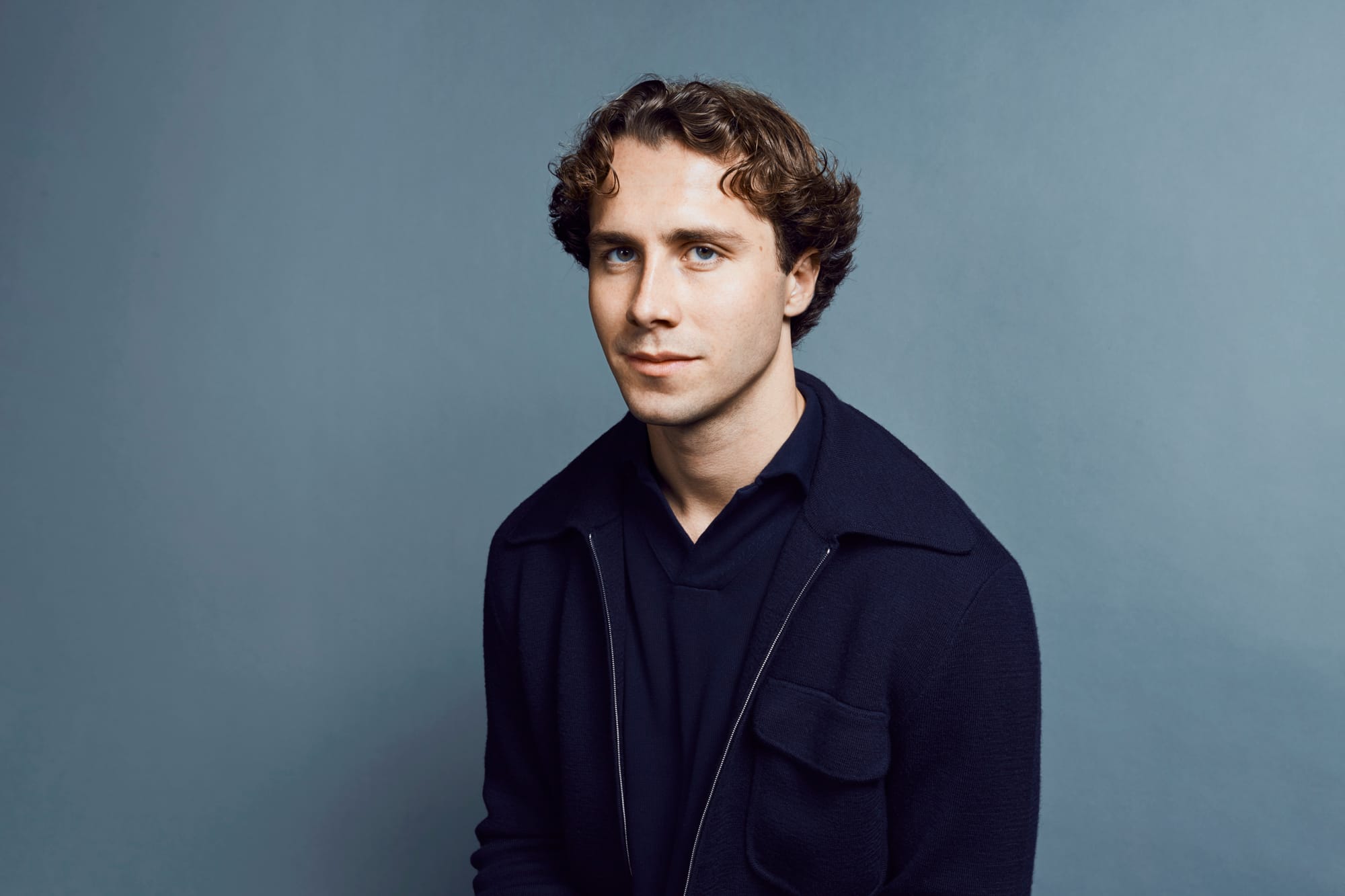
Sana’s Joel Hellermark on getting acquired, staying Swedish, and why rumours of the death of Saas have been overstated.
(A few quotes from this interview appeared in the Financial Times on March 5.)
In what was undoubtedly a wild year for AI startups, Workday’s acquisition of Swedish agentic AI startup Sana was a landmark event. The deal, worth $1.1 billion, was the largest AI acquisition Europe had ever seen, dwarfing even Salesforce’s dual European acquisition of Cognigy ($1bn) and Convergence ($200m) earlier in 2025.
But a few months earlier, says Joel Hellermark, founder of Sana, getting acquired was not part of the plan. It was only after a conversation with Workday’s CEO that he agreed, having turned down other buyout bids, and with guarantees that the startup he founded in 2016 could continue to operate as separate entity and be based in Stockholm.
“I had never thought [about acquisition] before the summer [of 2025],” he says. “I got called up by the CEO and he talked me through what he wanted to do. And we decided to do it, and then it started to feel like the more exciting path. At some point it felt inevitable and that decision felt like the obvious one to make.
“But it was never something we optimized for, or were planning on.”
 Joel Hellermark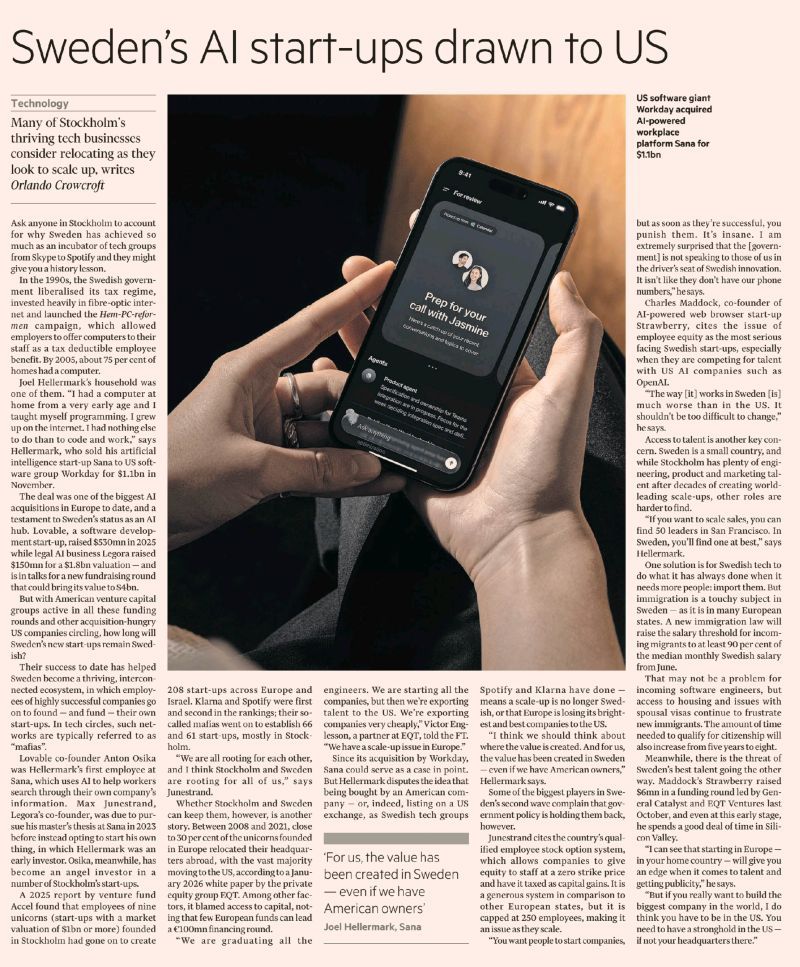
Hellermark founded Sana straight out of high school at just 19, having decided not to go to university and study online instead. Like many young Swedes of his generation, Hellermark’s family had purchased a PC via a government scheme to provide tax breaks to companies that provided their employees with computers. He immediately had access to courses from US universities and began teaching himself to code.
Sana’s “knowledge assistant” indexes company information, using AI to create a searchable database, while Workday is an online platform that allows companies to manage payments, staff and company invoicing. The deal is the most recent example of an established legacy player acquiring a startup as part of an ‘aqui-hire’.
The growth rates are nothing like we've ever seen before.
It should be a match made in heaven and, speaking three months on, Hellermark sticks to the script: “Winning AI today is a distribution game. And I think if you combine category-leading products with the best distribution, you are in pole position to win this.
“That's what we saw with Workday. This is a company that over 12,000 of the world's leading enterprises have run all of their data in, and trust them.”
There have been great examples of major companies buying startups - Microsoft and LinkedIn - and not so good ones - Yahoo and Verizon, Yahoo and Tumblr. How to make sure that the Workday-Sana deals falls into the first camp?
“I think what's important is that there is absolute alignment in the strategy and that there's, I think, complete trust on a leadership level. And when that deviates, I think that's been resulting in some of the unsuccessful ones,” Hellermark says.
Elsewhere in the news as we sat down with Hellermark was the unveiling by generative AI vendor Anthropic of a legal plugin that will allow Claude, its LLM, to do legal tasks. The launch of Claude Cowork led to a meltdown public legal software stocks, and speculation from many commentators that it heralded the death of Saas altogether.
Hellermark doesn’t share that view. Although such plugins will undoubtedly lead to companies - and individuals - building custom software using code-free AI tools, Saas is a relatively small part of most company’s budgets. "If you're spending less than a percentage on your system of record that's running all of your payroll or all of your financial data, that's probably the last place you go to cut costs,” he says.
“It will generally be more expensive to switch that out than any sort of reductions you can in building and maintaining that yourself.”
If anything, he says, the launch of plugins like Anthropic’s are an opportunity for Saas companies. “These Saas companies are actually in a pole position to build the best agents for their verticals. Who are you going to go to for your sales agents? Who are you going to go to for your HR agents? You're likely going to go to the companies that have the most domain knowledge and have the most proprietary data for that domain.”
“You might want to create a specific tool that handles a very specific process in procurement [...] or you want to spin up a custom dashboard. But are you going to go in and vibe code your HRIS or ERP? I think that's just very unlikely.”
Sweden’s second wave of tech has been centred on AI, with vibe-coding startup Lovable raising over $500m or the just under $1bn raised in the country in 2025 alone. Lovable’s co-founder, Anton Osika, was an engineer at Sana before starting his own startup, in which Hellermark was an early investor. He was also an early investor in Legora, another standout Stockholm AI startup, worth $1.8bn at its last fundraise in 2025 (UPDATE! Now it is more than $5.5 billion!).
Such valuations have prompted scepticism that the current AI boom is a bubble, but Legora - at least - is profitable.
“Naturally, there's going to be a few companies that don't have the numbers to support those valuations. But when you look at the best ones, they look expensive one month, and then three months later, they look very cheap again. The growth rates are nothing like we've ever seen before,” said Hellermark.
Are you using data properly? Are you sure you are using data properly?
A couple of months ago an agency asked me to come in and give a talk on how to use data to tell stories, something I've done as a journalist for many years.
So many startups and agencies are sitting on vast amounts of data that journalists would love to get their hands on. They get the story, you get the credit. It is a no brainer.
And yet, so few people within these companies know a) what data they have that journalists want and b) how to pitch it to journalists in a way that makes them actually read their emails.
I can help with this.
Check out my website here and drop me a line if you're interested.